Balancing mission and monetising
Museums aren’t just cultural treasures, they’re complex businesses juggling public service mandates with the realities of financial survival. Let’s take a Deep Dive into what keeps these beloved institutions afloat.
💰 From government grants and ticket sales to wealthy donors, museums piece together revenue from multiple sources to keep their doors open.
🧠 Museums aren’t just buildings full of old stuff. They’re economic engines that boost local tourism, create jobs and enhance psychological well-being.
🚀 To stay ahead of the times and remain financially viable, museums will need to embrace digital transformation, from VR tours to AI-powered visitor tracking.
QUOTABLE
“It’s not a place of artefacts; it’s a place of ideas.”
— Jeanie Kahnke, former senior director of external relations and partnerships, Muhammad Ali Center

BY THE NUMBERS

US$1 billion The Grand Egyptian Museum is considered to be the most expensive museum in the world, costing more than US$1 billion to build.
104,000 As of 2021, Unesco estimates approximately 104,000 museums worldwide although this number varies in different reports as the definition of a museum differs by country and organisation.
55% A 2025 report by American Alliance of Museums found that 55 per cent of US museums welcomed fewer visitors than in 2019, amid tighter household budgets and competition from at‑home and digital entertainment.
US$31 million The Met Gala, the annual fundraiser by The Metropolitan Museum of Art for its Costume Institute, raised a record-breaking US$31 million in 2025 through ticket sales, sponsorships and donations.
QUIZ
If a museum sells a painting from its permanent collection, what are they ethically supposed to do with the money?
A. Pay staff salaries and keep the museum running
B. Buy new art or fund conservation
C. Whatever they want—it’s their painting
Scroll to the bottom for the answer.
DID YOU KNOW?
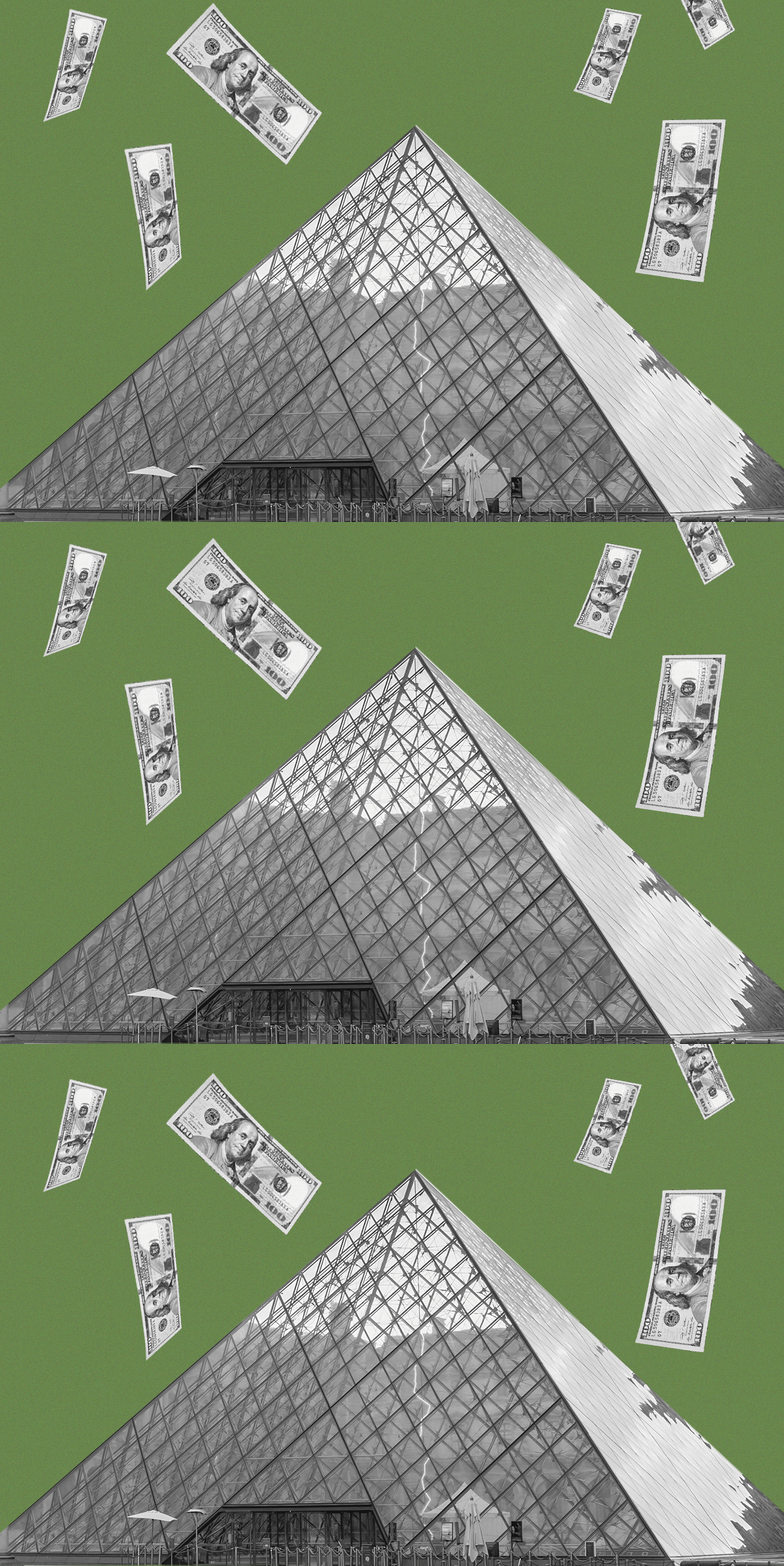
With a highly prized collection that includes the world-famous Mona Lisa, the Louvre Museum in Paris is regarded as the richest museum globally.
THE EDIT
🖼️ On loan. Museums often maintain substantial permanent collections acquired through purchases, donations or bequests, but they also borrow artworks.
🌡️ Climate control. The delicate nature of museum artefacts, many of which are centuries old, makes them extremely vulnerable to environmental changes and requires deliberate climate control.
💰 New revenue. Facing funding shortfalls, museums are starting to pursue self-generated revenue via real estate ventures like hotels and conference centres.
WATCH

Gift shops may be the final stop in most museums, but they’re far from mere tourist traps. What you encounter in these retail spaces—from high-end reproductions to quirky souvenirs—actually shapes how you remember and value the art itself.
THE FULL PICTURE
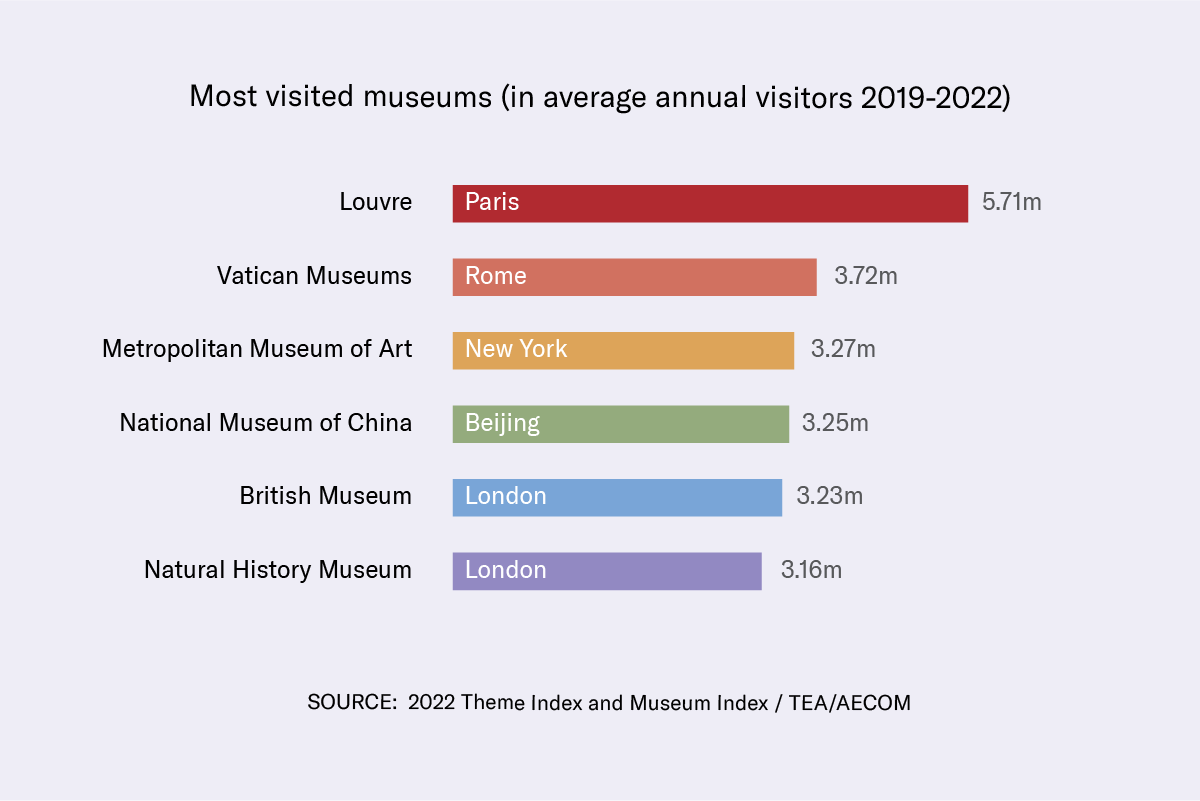
The most visited museum based on average annual visitors from 2019 to 2022 is the Louvre Museum with 5.71 million visitors, followed by the Vatican Museums and the Metropolitan Museum of Art.
KEY PLAYER
Laurence des Cars
Appointed by French President Emmanuel Macron in 2021, Laurence des Cars is the first woman to lead the Louvre Museum in its 230-year history. A renowned expert in 19th-century art, she previously headed the Musée d’Orsay and Musée de l’Orangerie.

HONOUREE TO KNOW
Eugene Tan
Eugene Tan believes in the transformative power of art—and has dedicated his career to making it central to society. As CEO of National Gallery Singapore and Singapore Art Museum (SAM) since 2024, and head of the Visual Arts Cluster comprising the Gallery, SAM and STPI, he plays a pivotal role in shaping Singapore’s visual arts landscape.

ONE FINAL THING
There’s a museum for almost everything. While the Museum of Modern Art (MoMA) in New York showcases Picasso, the Museum of Bad Art in Boston celebrates spectacularly awful paintings with the tagline, “Art too bad to be ignored.” Then, there’s the Sulabh International Museum of Toilets in New Delhi, which chronicles 4,500 years of sanitation history through a collection of commodes, chamber pots and lavatories.